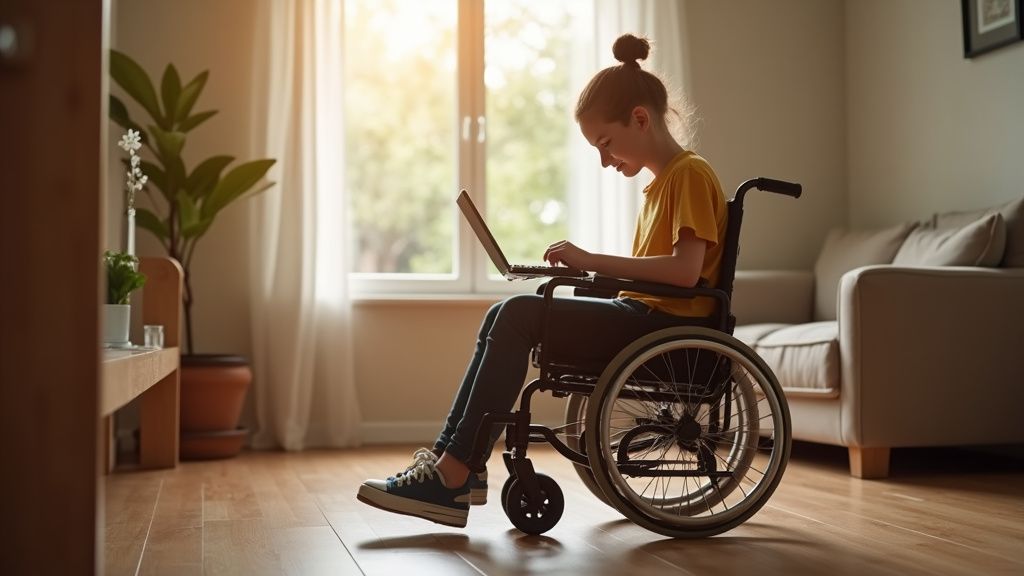
Assistive Technology for Cerebral Palsy: Navigating NDIS Support
Cerebral Palsy (CP) affects individuals in diverse ways, impacting movement, posture, and coordination. For many Participants living with CP, assistive technology (AT) can be life-changing, fostering independence, participation, and overall quality of life. The National Disability Insurance Scheme (NDIS) plays a crucial role in providing access to this vital support. This blog post explores the types of AT available for individuals with CP and how to access NDIS funding to obtain them. For a detailed look at assistive technology, wheelchairs, and home modifications relating to Cerebral Palsy and NDIS funding, please refer to our guide: See our complete cerebral-palsy-and-ndis-funding-assistive-technology-wheelchairs-and-home-mods guide.
Key NDIS Considerations for Assistive Technology and Cerebral Palsy
The NDIS provides funding for reasonable and necessary supports related to a Participant's disability. When considering AT for individuals with CP, several key factors influence funding decisions. Understanding these will empower you to prepare a strong NDIS Plan.
-
Reasonable and Necessary: The NDIS must deem the requested AT to be reasonable and necessary. This means it must directly relate to the Participant's disability, be effective and beneficial, represent value for money, and be safe and sustainable. This is according to Section 34 of the NDIS Act 2013.
-
Individual Needs: There is no one-size-fits-all approach. The NDIS considers the Participant's specific needs, goals, and circumstances when determining appropriate AT. Factors like age, environment (home, school, work), functional abilities, and personal preferences are all taken into account.
-
Goal Alignment: The AT must demonstrably help the Participant achieve their goals outlined in their NDIS Plan. For example, if a Participant's goal is to improve their independence at home, AT like modified utensils or dressing aids could be considered.
-
Evidence of Need: Strong evidence is crucial. This usually involves assessments and reports from qualified professionals such as Occupational Therapists, Physiotherapists, and Speech Pathologists. These assessments should clearly outline the Participant's needs, justify the recommended AT, and explain how it will improve their functional capacity.
-
Assistive Technology Levels: The NDIS categorizes AT into different levels based on cost and complexity. Lower-cost items (e.g., adapted cutlery) may be approved relatively easily. More complex or expensive items (e.g., powered wheelchairs, communication devices) often require more detailed assessments and justifications.
-
Home Modifications: Often, AT needs to be used in conjunction with home modifications to be truly effective. For example, a ramp may be needed to use a mobility device safely. Home modifications are also funded under the NDIS, subject to similar reasonable and necessary criteria.
-
Maintenance and Repairs: The NDIS may also fund the ongoing maintenance, repairs, and replacement of AT. It’s important to clarify these aspects in your Plan so that you don't have out-of-pocket expenses later on.
Types of Assistive Technology for Cerebral Palsy
Assistive technology for CP encompasses a wide range of devices and equipment designed to improve functional abilities across various aspects of daily life:
-
Mobility Aids: This includes wheelchairs (manual and powered), walkers, standing frames, and adapted strollers. They support movement and independence. Funding often requires detailed assessments to determine the most appropriate device and its configuration (e.g., seating, controls).
-
Communication Aids: These devices assist with communication for individuals who have difficulty speaking. Options include speech-generating devices (SGDs), communication boards, and software. Funding considerations include the Participant's communication needs, language abilities, and training requirements for both the Participant and their Support Workers/family.
-
Adaptive Equipment for Daily Living: This category includes a broad range of items that make everyday tasks easier, such as adapted utensils, dressing aids, bath chairs, and modified computers. These aids promote independence and reduce reliance on others.
-
Environmental Control Systems: These systems allow individuals to control their environment (e.g., lights, TV, temperature) using switches, voice commands, or eye-tracking technology. They enhance independence and comfort.
-
Seating and Positioning Systems: Proper seating and positioning are crucial for comfort, posture, and function. Specialized seating systems provide support, pressure relief, and stability.
-
Assistive Technology for Education and Employment: This includes devices and software that support learning and work, such as screen readers, voice recognition software, and adapted keyboards. These supports promote inclusion and participation in education and employment.
Practical Steps to Access NDIS Funding for Assistive Technology
Navigating the NDIS application process for AT can seem daunting, but breaking it down into manageable steps can help:
-
Identify Needs and Goals: Clearly identify the Participant's specific needs and how AT can help them achieve their goals as documented in their NDIS plan. What activities are difficult or impossible without AT? How will AT improve their quality of life?
-
Consult with Professionals: Seek assessments from qualified therapists (Occupational Therapist, Physiotherapist, Speech Pathologist). They can assess the Participant's needs, recommend appropriate AT, and provide written reports to support the NDIS application. Make sure they have experience in NDIS funding applications.
-
Gather Evidence: Collect all relevant documentation, including medical reports, therapy assessments, and quotes for the AT. The more comprehensive the evidence, the stronger the application.
-
Trial Equipment: Whenever possible, trial different types of AT to determine which best meets the Participant's needs. Many AT providers offer trials. This ensures the most suitable solution is selected.
-
Submit a Detailed Request: Prepare a detailed request for funding, outlining the specific AT needed, the rationale for its use, and the cost. Include all supporting documentation.
-
Attend Plan Review Meetings: Be prepared to discuss the AT request at Plan review meetings and answer any questions from the NDIS Planner. Advocate strongly for the Participant's needs.
-
Implement and Review: Once funding is approved, work with therapists and AT providers to implement the AT and ensure it is properly fitted and used. Regularly review the effectiveness of the AT and make adjustments as needed.
-
Utilize Your Support Coordinator: If you have one, your Support Coordinator will be invaluable in navigating this process, providing guidance, liaising with providers, and helping prepare your NDIS plan.
Conclusion
Assistive technology can dramatically improve the lives of individuals with Cerebral Palsy, fostering independence, participation, and well-being. By understanding the NDIS processes and requirements, gathering strong evidence, and working collaboratively with professionals, Participants can access the AT they need to live fulfilling lives. Remember to constantly advocate for your needs, and don't hesitate to seek assistance from advocacy services if you encounter challenges. The NDIS is there to support you; it's up to you to leverage it effectively.

