Emergency Communication Accessibility: National Relay Service and Translating Protocols during Hazards
TL;DR: This article details the essential emergency communication systems and accessibility services, such as the National Relay Service and translating protocols, used to protect individuals with disabilities during public safety incidents.
Accessing Emergency Information in Real-Time
During active public hazards, rapid and clear communication is essential to protect public health and safety. For example, during a localized natural gas leak on Smith Street in Cobden, the Country Fire Authority issued an Advice-level chemical hazard warning to notify the community of emergency service activity and potential gas odors.
To minimize exposure and protect physical health, public safety guidelines advise residents to close all windows and doors to prevent gas odors and vapors from entering homes or businesses. Additionally, keeping local roads clear is crucial to allow emergency service vehicles to respond and resolve the hazard efficiently.
Emergency information is distributed across several communication channels to reach as many people as possible, including:
- The VicEmergency website (www.emergency.vic.gov.au)
- The VicEmergency Hotline (1800 226 226)
- The official VicEmergency mobile application
- Social media platforms (Facebook and Twitter/X under hashtags like #vichazmat)
- ABC Local Radio, commercial radio stations, community radio, and Sky News TV.
Dedicated Disability and Language Support Services
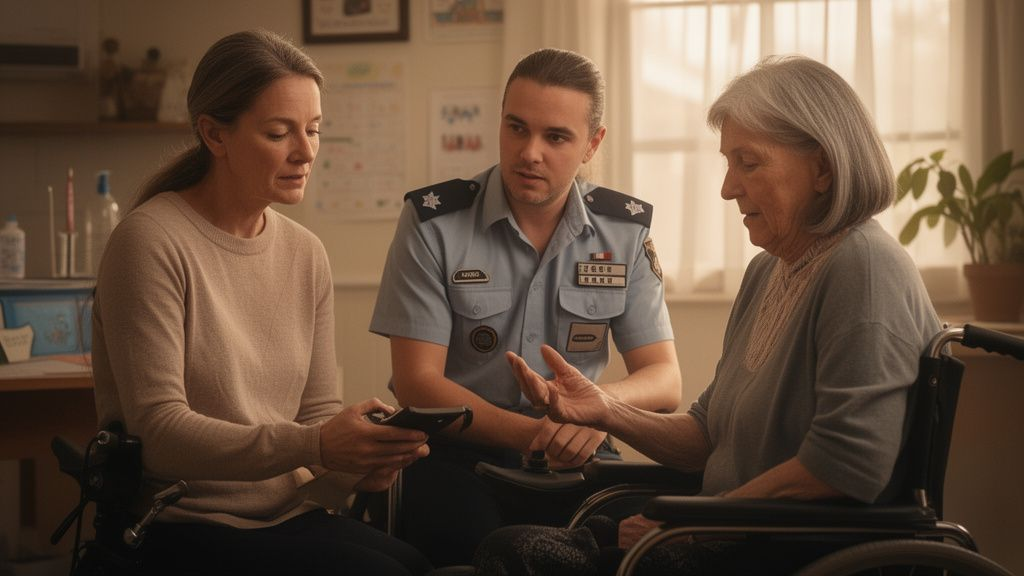
Standard broadcast and digital channels may not be fully accessible to all individuals, particularly those with communication, hearing, or language barriers. Specialized translation and accessibility services are integrated into emergency response frameworks to ensure no one is left uninformed:
- The National Relay Service (NRS): Individuals who are deaf, hard of hearing, or have a speech or communication impairment can use the National Relay Service to contact emergency hotlines. By utilizing the NRS, users can communicate their immediate safety needs and ask relay agents to contact the VicEmergency Hotline on their behalf.
- The Translating and Interpreting Service (TIS National): For individuals who require information in languages other than English, TIS National provides a free translating service on 131 450. Operators can translate complex safety warnings and facilitate calls to the VicEmergency Hotline to ensure non-English speaking residents understand necessary safety measures.
These specialized portals are essential for maintaining safety and operational equity, allowing high-risk advice to be understood and implemented by every demographic within an affected area.
Broader Emergency Planning and Multi-Channel Alerts
Accessible communication is also critical for long-term household disaster preparation. Public safety agencies maintain guidelines for a range of seasonal and acute environmental events, including:
- Mould Remediation: Following periods of prolonged rainfall, homes can become breeding grounds for mould. Clearing and cleaning mould correctly is vital to prevent serious respiratory health impacts.
- Earthquake Safety: Knowing the seven safe things to do immediately following a local earthquake is essential to minimize personal injury.
- Service Outages: Families should maintain planning guidelines to manage potential losses of telephone and internet service.
- Severe Weather and Tsunamis: Developing comprehensive household severe weather plans and coastal tsunami plans helps prevent property damage and protects lives during extreme environmental shifts.
Key Takeaways
- Immediate Safety Actions: During chemical hazards like gas leaks, residents should close all doors and windows to block fumes and keep surrounding roads clear.
- National Relay Service Access: People with hearing or speech impairments can use the National Relay Service to contact emergency hotlines, including the VicEmergency Hotline.
- Language Interpretation: TIS National provides translation assistance on 131 450 for individuals requiring emergency information in languages other than English.
- Information Channels: Multiple official sources, including the VicEmergency app, emergency.vic.gov.au, and ABC Local Radio, should be monitored during active incidents.
- Comprehensive Preparedness: Accessible safety guidelines cover post-rain mould removal, earthquake response, telecommunications outages, and tsunami planning.