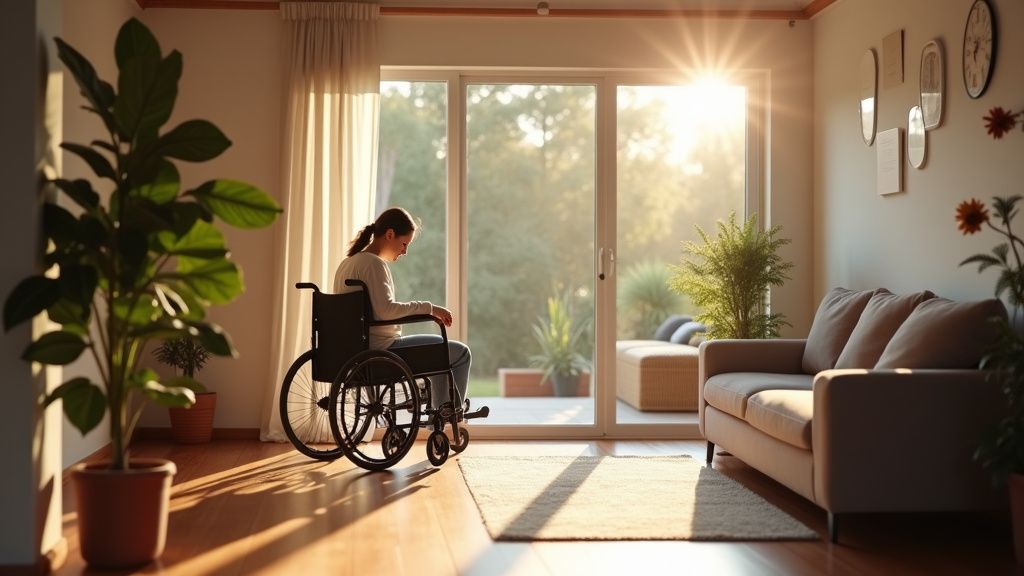
Home Modifications for Spinal Cord Injury: Creating Accessible Living Spaces
Living with a spinal cord injury (SCI) can bring about significant changes, influencing how you navigate and interact with your home environment. Modifying your home to meet your specific needs is a proactive and empowering step towards regaining independence and improving your quality of life. This post explores how to create an accessible living space after a spinal cord injury, covering key areas to consider, available support, and how the NDIS can assist you. See our complete spinal-cord-injury-ndis-packages-funding-for-complex-care-and-home-modifications guide.
For NDIS Participants with a spinal cord injury, the goal of home modifications is to create a safe, comfortable, and functional environment that promotes independence and well-being. Small obstacles like steps, narrow doorways, or poorly designed spaces can present daily challenges. By making appropriate modifications, your home can become a supportive space where you can focus on living your life to the fullest.
Key NDIS Considerations for Home Modifications
Before embarking on any home modifications, it's essential to understand how the NDIS can support you. Here's a breakdown of key considerations:
- Occupational Therapist (OT) Assessment: The first step is to engage an OT. An OT will conduct a thorough assessment of your current home, considering your specific needs and challenges arising from your spinal cord injury. This assessment will result in a detailed report outlining recommended modifications to enhance safety and accessibility. This report is crucial for your NDIS application.
- NDIS Funding for Home Modifications: As an NDIS Participant, you may be eligible for funding under your Plan for home modifications that are considered "reasonable and necessary." The OT report forms the basis of your funding request.
- Types of Home Modifications Funded: NDIS funding can potentially cover a wide range of modifications, including:
- Ramps and handrails for safe access.
- Widening doorways for wheelchair or mobility aid access.
- Bathroom modifications (grab rails, roll-in showers, adjustable basins).
- Kitchen modifications (lowered benchtops, accessible storage).
- Bedroom modifications (height-adjustable beds, accessible wardrobes).
- Installation of assistive technology (smart home controls).
- Navigating the NDIS Process: Applying for NDIS funding for home modifications can seem daunting. A Support Coordinator or Plan Manager can provide invaluable assistance in navigating the process, from preparing your application to coordinating the modifications themselves. They can also help you understand the various support categories within your Plan that may be relevant.
- Reasonable and Necessary Criteria: The NDIS uses the "reasonable and necessary" criteria to determine what supports and modifications it will fund. This means the modifications must be directly related to your disability, represent value for money, and be the most appropriate and effective solution for your needs.
Practical Steps to Creating an Accessible Living Space
Here's a room-by-room guide to practical modifications that can make a significant difference:
1. Entryway:
- Ramps and Handrails: Install ramps with sturdy handrails at all entry points to eliminate steps. Ensure the ramp has a gentle slope for easy navigation.
- Thresholds: Remove raised thresholds or install transition strips to prevent tripping hazards.
- Doorways: Widen doorways to at least 850mm to accommodate wheelchairs and other mobility devices. Consider installing automatic door openers for increased independence.
2. Bathroom:
- Grab Rails: Install grab rails next to the toilet and in the shower area for added stability and safety.
- Roll-in Shower: Opt for a curbless, roll-in shower with a handheld showerhead and a shower bench or chair.
- Non-Slip Flooring: Use non-slip flooring throughout the bathroom to minimize the risk of falls.
- Basin and Taps: Lower the basin and install easy-to-use lever taps for accessibility.
3. Kitchen:
- Lowered Benchtops and Cooktops: Lowering benchtops and cooktops allows you to prepare food comfortably while seated.
- Accessible Storage: Replace overhead cabinets with drawers and pull-out pantry shelves for easy access to stored items.
- Knee Clearance: Ensure there's ample knee clearance under sinks and benchtops to allow comfortable use while seated.
4. Bedroom:
- Adjustable Bed: A height-adjustable bed can facilitate safe and easy transfers in and out of bed.
- Clear Floor Space: Create ample clear floor space around the bed for easy maneuverability with a wheelchair or mobility aid.
- Accessible Storage: Utilize lower drawers, open shelving, or customized wardrobes to keep clothing and personal items within easy reach.
5. Living Room:
- Furniture Arrangement: Rearrange furniture to create clear, wide pathways for safe movement.
- Assistive Technology: Incorporate smart home technology to control lighting, blinds, and temperature with ease.
- Hazard Removal: Remove rugs or other tripping hazards to reduce the risk of falls.
When Modification Isn't Enough: Alternative Housing Options
In some instances, modifying an existing home may not be feasible or cost-effective. In such cases, exploring alternative housing options may be more suitable. These options can include:
- Specialist Disability Accommodation (SDA): SDA provides housing specifically designed for individuals with high support needs.
- Supported Independent Living (SIL): SIL provides support services within a shared living environment, promoting independence and community inclusion.
Conclusion
Creating an accessible living space after a spinal cord injury is a significant step towards regaining independence and enhancing your quality of life. By working closely with an Occupational Therapist, understanding your NDIS Plan, and implementing practical modifications, you can transform your home into a supportive and empowering environment. Remember, you are not alone in this journey. Support Coordinators, Plan Managers, and other allied health professionals are available to assist you in navigating the NDIS process and achieving your goals. Your home should be a haven – a place where you feel comfortable, safe, and empowered to live life on your own terms.

