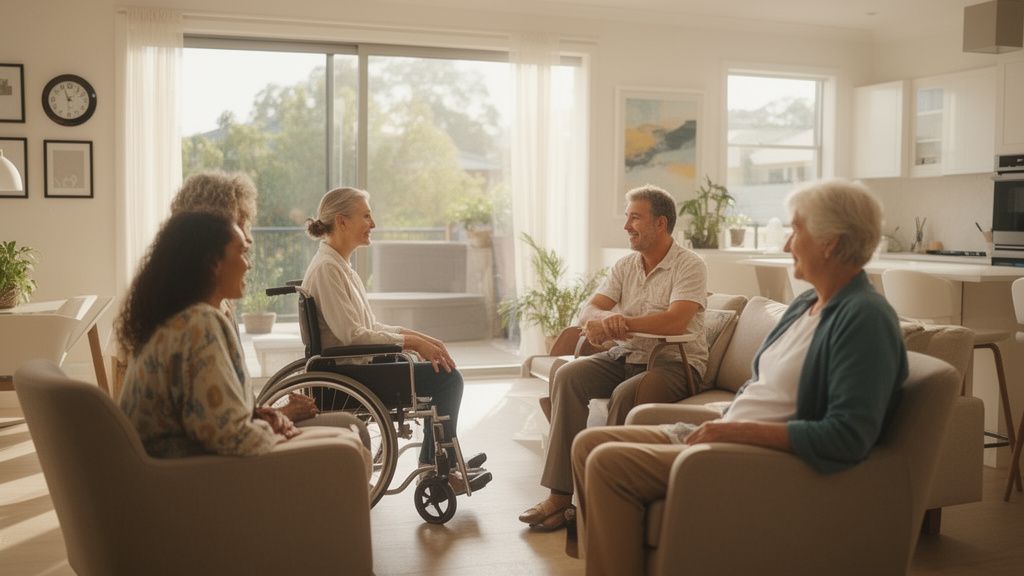
Navigating the New NDIS SIL Definition: What It Means for You
TL;DR: The NDIS Commission has introduced a formal definition for Supported Independent Living (SIL), effective July 1, 2026, replacing the previous registration group. This new definition clarifies what constitutes SIL, outlining specific criteria and exclusions, which directly impacts both Participants receiving support and providers delivering these essential services. Understanding these changes is crucial for ensuring continuity of support and NDIS compliance.
The NDIS landscape is continually evolving, and a significant change is on the horizon for Supported Independent Living (SIL) services. The NDIS Commission has published an official, formal definition of SIL, set to be introduced as part of the amended Provider Registration Rules. These changes, particularly the introduction of a new registration group (0138 Assistance with Supported Independent Living) from July 1, 2026, will replace the current 0115 group for SIL-specific supports. This article breaks down what this new definition entails, who it affects, and what steps you need to take. For a comprehensive overview of how these changes might apply to you, See our complete does-the-new-ndis-sil-definition-apply-to-you guide.
What Is the New Official Definition of Supported Independent Living (SIL)?
The NDIS Commission has formally defined Supported Independent Living (SIL) as a specific package of home and living support designed for Participants with higher support needs. For a service to be classified as SIL under this new framework, all three of the following conditions must be met: Firstly, the support must be a comprehensive package of home and living assistance tailored for individuals requiring significant daily support within their home environment. Secondly, the provider must be actively managing and delivering these supports directly, implying a structured and coordinated approach to care. Lastly, the Participant must require support for 'most of the day,' indicating a need for extensive and ongoing assistance rather than just a few sporadic hours. This refined definition aims to clearly differentiate SIL from other home and living supports, ensuring that providers and Participants have a mutual understanding of the services being funded and delivered. This clarity is essential for aligning services with Participant plans and ensuring appropriate allocation of NDIS funding.
What Specific Services Are NOT Classified as SIL Under the New Rules?
The new SIL definition includes two crucial exclusions that clarify what services will no longer be considered SIL, even if they involve daily living support in a Participant's home. These exclusions are designed to narrow the scope of SIL, ensuring that services truly align with the specific high-level support needs the definition aims to cover. Understanding these boundaries is vital for both Participants and providers to accurately categorise and fund supports.
When Is Support Not Considered "Most of the Day"?
A key exclusion is for Participants who only receive a few hours of support per day or week. If a Participant's support needs do not require assistance for 'most of the day,' it will not be classified as SIL. While the NDIS Commission has not yet provided a precise numerical definition for 'most of the day,' the implication is that intermittent or partial-day support falls outside the SIL scope. Such support may still be crucial for a Participant's daily living, but it would likely be funded under other NDIS registration groups, not as SIL. This distinction helps to target SIL funding towards those with more continuous and intensive in-home support requirements, often associated with 24/7 or near 24/7 support structures.
What Happens if a Participant Manages Their Own Support Workers?
Another significant exclusion applies when a Participant chooses and manages their own support workers. If a Participant is directing their own supports – this includes selecting their workers, planning their roster, and independently managing the overall arrangement – the service will not be considered SIL under the new definition, even in a shared living setting. The third element of the SIL definition explicitly requires the provider to be managing and delivering the supports. If the Participant is genuinely running this process, the provider is not performing the specific 'SIL function' as defined. While good SIL providers often involve Participants in choices, this exclusion targets arrangements where the Participant holds the primary management responsibility, differing from situations where a provider solicits Participant preferences within a managed support structure.
Why Do These Changes Matter for NDIS Participants and Providers?
These changes carry significant implications for the entire NDIS ecosystem, particularly for Participants relying on home and living supports and providers delivering them. The new formal definition and associated registration requirements aim to enhance quality, transparency, and consistency in SIL service delivery. For Participants, this means a clearer understanding of what to expect from SIL, potentially leading to better-matched supports and improved outcomes. For providers, it necessitates a critical review of their service models to ensure compliance and proper registration.
The introduction of the new registration group, 0138 Assistance with Supported Independent Living, is central to these changes. Providers currently claiming under the old 0115 registration group for SIL-specific supports must re-evaluate whether their services align with the new, stricter definition. If a provider's service model does not meet all three criteria of the new definition, they will no longer be delivering SIL as formally defined. This doesn't necessarily mean they stop providing essential daily living supports, but rather that these supports might fall under different NDIS registration groups, which may have their own distinct requirements and pricing structures.
Moreover, the changes highlight the NDIS Commission's focus on provider accountability. All registered SIL providers will be required to comply with the NDIS Act, the NDIS Rules, the Commission's compliance framework, and specific Practice Standards. This increased scrutiny is intended to safeguard the quality and safety of services provided to vulnerable Participants. Understanding these shifts is paramount for ensuring ongoing access to appropriate supports for Participants and maintaining compliant operations for providers.
What Are the Key Timelines and Action Steps for Providers and Participants?
The implementation of the new SIL definition introduces concrete timelines and requires specific actions from both providers and, indirectly, from Participants. Missing these dates or failing to adapt can have significant consequences for service continuity and provider eligibility. It's imperative to act proactively to ensure compliance and uninterrupted support.
What Are the Critical Dates for NDIS SIL Registration?
The key dates to be aware of are fast approaching. From 1 July 2026, the new registration group 0138 'Assistance with Supported Independent Living' officially replaces the current 0115 group. This marks the formal transition to the new definition and its associated requirements. For providers who are currently delivering SIL without formal registration, there is a strict deadline: you must apply for registration by 1 October 2026. Failure to do so means you will be legally required to cease delivering SIL services under the new definition. Furthermore, if you are planning to start delivering SIL services and apply for registration after 1 July 2026, you cannot commence providing these services until your registration is officially approved by the NDIS Commission. These timelines underscore the urgency for all parties involved to understand and respond to the updated regulations.
How Will Broader Registration Changes Affect Daily Living Supports?
It's important to note that even if your service model for daily living support falls short of the new, more stringent SIL definition, your services may still be impacted by future regulatory changes. The Australian Government has announced an expanded mandatory registration for providers delivering personal care, daily living supports, and supports in closed settings, which is anticipated to come into effect from July 2027. This means that many services currently operating without mandatory registration, including those that no longer qualify as SIL under the new definition, may soon be subject to new registration requirements. While further details on this broader expansion are yet to be published, providers of any form of daily living assistance should be prepared for increased regulatory oversight and potential mandatory registration in the near future. This ongoing evolution of NDIS regulations highlights a broader move towards greater accountability and quality assurance across the sector.
How Can You Navigate 'Grey Areas' in the New SIL Definition?
Navigating the nuances of the new NDIS SIL definition can present challenges, particularly where service models might seem to fall into 'grey areas.' Terms like 'most of the day' and the distinction between 'participant choice' and 'participant management' of support workers are still subject to interpretation. These ambiguities can create uncertainty for both Participants and providers.
If your current service model or a Participant's support arrangement appears to sit on the boundary of the new definition, it is crucial not to make assumptions. Relying on summaries, even this one, is not sufficient for definitive compliance. The NDIS Commission intends to publish the full legal definition within the finalised Provider Registration Rules. Therefore, the most accurate and up-to-date information will be found directly in these official documents. For specific guidance, it is highly recommended to contact the NDIS Commission directly. Alternatively, consulting with an Approved Quality Auditor who possesses extensive experience with SIL services can provide valuable insights and clarity on how the new rules apply to your unique situation. Proactive engagement with these resources is the best way to ensure compliance and continuity of appropriate supports.

